
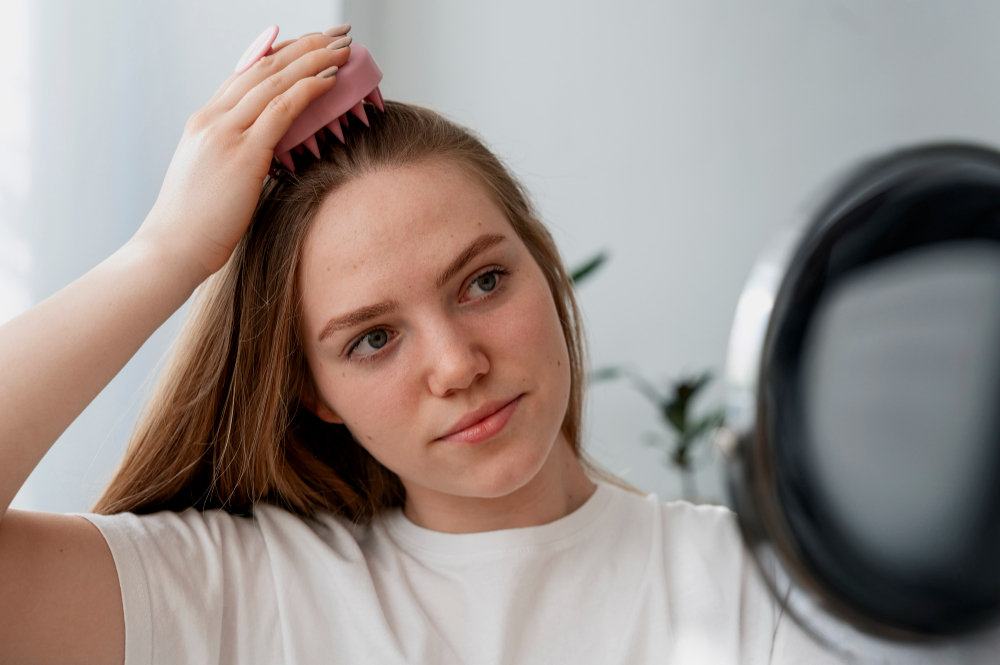
Hair loss, medically known as Androgenetic alopecia, affects millions of women in the United States. Many ignore the early signs as stress, seasonal shedding, or due to the usage of a new shampoo. Unlike male pattern baldness, female hair loss develops gradually and is less predictable. By the time it becomes noticeable, significant follicle miniaturization may have already occurred.
At PRP in Seattle, licensed aestheticians, supervised by certified cosmetic surgeons, specialize in identifying early-stage female hair loss, when treatments like PRP Hair Restoration, Exosome Hair Restoration, and PRF Hair Therapy are most effective.
These treatments are generally safe, minimally invasive, and performed under strict medical supervision to ensure patient comfort and safety. Recognizing early signs and acting promptly is crucial for maintaining long-term hair density.
Is Hair Loss Normal?
Losing 50 to 100 hairs a day is normal and part of a healthy hair cycle. Each hair goes through three stages: anagen (growth), catagen (transition), and telogen (resting), before it falls out and is replaced by a new one.
Problems start when you lose more hair than you grow back, or when new hairs come in thinner and shorter. If shedding lasts longer than three months or you notice unexplained changes in hair thickness, it’s a good idea to get checked by a professional. Short-term changes from seasons or diet are normal, but ongoing shedding with visible thinning is not.
6 Early Signs of Female Hair Loss
- A Widening Part Line
A gradual widening of the natural part is a common early sign of female pattern hair loss. Because it develops slowly, many women notice it only when comparing recent photos to older ones. This widening occurs as follicles along the crown and top of the scalp miniaturize under hormonal influence, producing finer, shorter hairs that reduce coverage.
Bright overhead lighting and direct sunlight make this change more noticeable. If your part appears wider than it did 6 to 12 months ago, consider scheduling an evaluation.
- More Hair Shedding Than Usual
Finding more hair on your pillow, in the shower drain, or on your brush is a common worry. Some extra shedding is normal during seasonal changes or short-term stress. The main thing to watch is how long it lasts, temporary shedding usually stops within eight to twelve weeks. If it goes on for more than three months or comes with other symptoms, there may be another cause.
A helpful self-check is to examine shed hairs. Naturally shed hairs from the telogen phase have a small white bulb at the root. Hairs lacking this bulb or appearing progressively thinner may indicate miniaturization rather than normal cycling.
- Reduced Hair Volume
A ponytail that feels noticeably thinner, less fullness at the crown, or difficulty achieving sA thinner ponytail, reduced fullness at the crown, or difficulty achieving previous hairstyles are clear signs of decreased hair density. These changes often develop gradually, so many women adapt without noticing until their usual styles no longer work.They carry greater sensitivity to hormonal changes. Running fingers through the hair and noticing more scalp than before is a practical early check.
- Visible Scalp Under Bright Light
Greater scalp visibility under direct lighting or sunlight, especially at the crown and top of the head, indicates changes in follicle output rather than a styling issue. When previously covered areas become visible, follicles are producing thinner, shorter hairs.
This sign is important because it signals a window for effective treatment. Follicles at this stage still function, making regenerative treatments like PRP Hair Restoration and Exosome Hair Restoration more effective. Delaying treatment limits available options.
- Hair That Stops Growing Past a Certain Length
Hair that stops growing past a certain length indicates a shortened anagen (growth) phase due to follicle miniaturization. As follicles shrink, hair reaches its maximum length sooner before shedding. Because the hair may still appear healthy, this sign is often mistaken for breakage or damage rather than a change in follicle function.
- Excessive Breakage
Breakage and hair loss are different, but often occur together in early-stage female hair loss. Miniaturized follicles produce weaker hairs that break more easily. Scalp conditions like reduced blood flow or inflammation can also weaken hair. If breakage occurs with other signs, a combined scalp and hair health assessment is recommended.
Common Causes of Female Hair Loss
Identifying the cause of hair loss is essential for effective treatment. Several factors contribute to hair thinning in women:
- Genetics: Female pattern hair loss runs in families. Women with a mother or maternal grandmother who experienced significant thinning carry a higher baseline risk.
- Hormonal changes: Fluctuations in estrogen, progesterone, and androgens directly affect the hair follicle cycle. These shifts occur during perimenopause, menopause, and in response to hormonal contraceptives.
- Menopause and perimenopause: The hormonal reorganization of this stage frequently triggers or accelerates female pattern hair loss. It also represents an ideal window for intervention before follicle function declines further.
- Pregnancy and postpartum changes: During pregnancy, elevated hormone levels can keep hair in the growth phase longer than usual. After delivery, the correction causes a shedding increase that typically resolves within 6 to 12 months. In some women, this progresses into longer-term hair thinning.
- Chronic stress: Prolonged stress can push follicles into the resting phase prematurely, a condition known as telogen effluvium, which increases daily shedding. Stress-related hair loss often reverses when stress decreases, but sustained, severe stress can trigger or worsen pattern hair loss.
- Nutritional deficiencies: Iron, vitamin D, B vitamins, and adequate protein are all directly linked to hair follicle health. Blood work can identify deficiencies that are causing shedding.
- Thyroid disorders: Both overactive and underactive thyroid function disrupt hair growth cycles. Thyroid testing is a standard part of any thorough hair loss evaluation.
- Medical conditions: Polycystic ovary syndrome (PCOS), autoimmune conditions, and other systemic disorders can trigger or worsen hair loss. According to the National Institutes of Health, androgenic alopecia affects women across all age groups and is often underdiagnosed.
When to Seek Treatment?
The most important factor in hair restoration outcomes is timing. Treatments like PRP Hair Restoration, Exosome Hair Restoration, and PRF Hair Therapy work by stimulating follicles that still retain function. Waiting until hair loss has progressed past that functional window reduces what any non-surgical treatment can achieve.
A licensed aesthetician or hair restoration specialist can assess your scalp, evaluate follicle activity, and identify the underlying cause of hair loss. This evaluation establishes a baseline and guides the most effective treatment plan. Women in Seattle, Bellevue, Kirkland, and nearby areas can schedule a Hair Restoration Consultation at PRP in Seattle.
Treatment Options for Female Hair Loss
When hair loss is caught early, several evidence-supported options can slow progression, strengthen existing hair, and support healthier regrowth:
PRP Hair Restoration: Platelet-rich plasma therapy uses growth factors drawn from the patient’s own blood to stimulate dormant follicles and improve scalp blood flow. PRP is especially effective for early to moderate hair loss, where follicles retain enough function to respond.
Exosome Hair Therapy: Exosome treatments deliver regenerative signaling molecules that promote follicle repair and support the conditions needed for healthy hair growth. This approach is well-suited for women experiencing early-stage miniaturization.
PRF Treatments: Platelet-rich fibrin offers a continuous release of growth factors and supports improved blood flow and scalp healing over time.
Nutritional and Lifestyle Support: Correcting underlying deficiencies using targeted supplementation and dietary changes provides the biological foundation that all other treatments depend on.
Customized Treatment Plans: For most women, the most effective approach unites treatments based on the root cause and the current stage of hair loss. The licensed aestheticians at PRP in Seattle create individualized protocols rather than applying a single-solution approach across all patients.
Can Female Hair Loss Be Reversed?
The answer depends on two things: how far hair loss has progressed and what is driving it. Hair loss caused by hormonal changes, nutritional deficiencies, stress, or thyroid dysfunction can often be partially or fully reversed when treated early. The American Academy of Dermatology notes that early intervention produces significantly better outcomes than waiting for hair loss to become visually advanced.
Severe hair loss with permanently dormant follicles cannot be reversed with non-surgical treatments. However, early intervention can slow progression and preserve remaining density. Realistic goals include stopping further loss, strengthening existing follicles, and improving regrowth quality and thickness, rather than creating new follicles.
Why Acting Early Gives Better Results?
Follicles that retain function respond well to regenerative treatments. Once follicles become dormant, non-surgical options are limited and outcomes are less predictable. Early diagnosis allows for treatment of underlying causes, such as hormonal imbalances, thyroid dysfunction, and nutritional deficiencies, before further damage occurs.
Women who seek expert assessment at the first signs of thinning consistently preserve more hair density than those who wait. Detecting hair loss at the widening-part stage, rather than the visible-scalp stage, often determines whether most hair can be retained.
Schedule a Hair Loss Evaluation at PRP in Seattle
Subtle changes in part width, daily shedding, or ponytail thickness should be taken seriously. Female hair loss develops gradually, making early detection important. Licensed aestheticians at PRP in Seattle help women in Seattle, Bellevue, Kirkland, and nearby areas identify early hair loss and create personalized treatment plans using PRP, exosome therapy, and PRF.
Delaying treatment consistently limits results. Schedule a Hair Restoration Consultation today to assess your situation before hair loss progresses further.
Frequently Asked Questions
What is the first sign of female hair loss?
A widening part line is often the earliest visible sign, though increased shedding or a thinner ponytail may appear first depending on individual hair characteristics. Monitoring changes in styling ease or hair volume over time is a reliable early indicator.
How much hair shedding is normal for women?
Shedding 50 to 100 hairs per day is normal. Shedding that consistently exceeds this amount, or lasts beyond three months without an obvious temporary cause, should be evaluated by a hair loss specialist.
Can stress cause hair loss in women?
Yes. Chronic stress can push hair follicles into the resting phase early, causing telogen effluvium and increased shedding. Stress-related hair loss often reverses when stress decreases, but prolonged or severe stress can trigger or worsen female pattern hair loss.
Is female hair loss permanent?
Not always. Hair loss from hormonal shifts, nutritional deficiencies, or thyroid dysfunction can often be reversed or improved with treatment. Advanced female pattern hair loss with permanently dormant follicles is harder to reverse, making early diagnosis and treatment essential for better outcomes.
What treatments work best for female hair thinning?
PRP hair restoration, exosome therapy, and PRF treatments are effective for early to moderate female hair loss because they target follicle function using the body’s regenerative signals. The best treatment depends on the underlying cause and stage of hair loss, so expert assessment is essential.
When should a woman see a hair restoration specialist?
Schedule a consultation if you notice a widening part line, shedding lasting more than three months, a thinner ponytail, or visible scalp at the crown. Early evaluation offers the best chance to identify the cause and start treatment while follicles remain responsive.