Knee pain can make everyday activities such as walking, exercising, climbing stairs, or participating in sports more difficult. For people who want to explore treatment options without immediately considering surgery, platelet-rich plasma (PRP) therapy may be an option. PRP uses a concentrated portion of a patient’s own blood and is designed to support the body’s natural healing response.
At PRP In Seattle, PRP for Knee Pain in Seattle is offered to patients from Seattle, Kirkland, Bellevue, and surrounding communities. The treatment is intended for specific types of knee pain and injuries, so determining whether you are a suitable candidate begins with an individual evaluation.
What Are PRP Knee Injections?
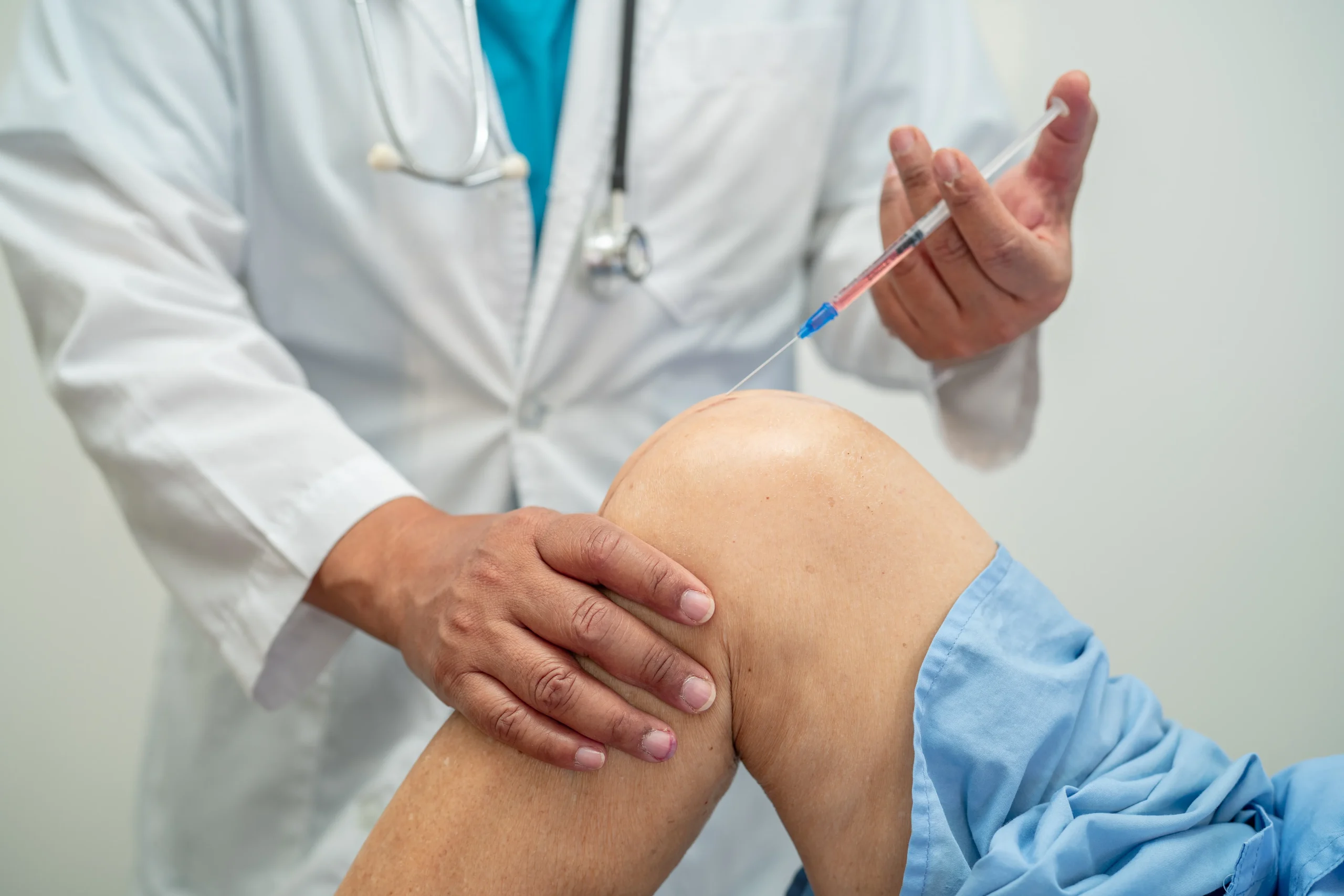
PRP knee injections involve drawing a small amount of your blood and processing it to concentrate platelets and growth factors. The resulting platelet-rich plasma is then injected into the affected area of the knee.
PRP is considered a minimally invasive treatment because it does not require surgery or a lengthy recovery period. Depending on the underlying condition, the goal may be to reduce discomfort, support tissue healing, and improve joint function.
PRP may be considered for conditions such as mild-to-moderate knee osteoarthritis, certain tendon problems, meniscus-related discomfort, sports injuries, and other sources of chronic knee pain.
Who Is a Good Candidate for PRP Knee Injections?
There is no single profile that determines whether someone is suitable for PRP. Your symptoms, diagnosis, medical history, imaging, activity level, and previous treatments all matter.
You may be a candidate if you:
- Have mild-to-moderate knee osteoarthritis
- Experience persistent knee pain or stiffness
- Have a sports or overuse injury that has not fully improved
- Have certain tendon, ligament, or meniscus-related problems
- Want to explore a nonsurgical treatment option
- Have tried conservative approaches such as physical therapy, activity modification, or medication without adequate improvement
- Want to remain active while managing knee discomfort
PRP may be more appropriate when there is sufficient healthy tissue for the body’s healing response to work with. Advanced joint degeneration may require a different treatment approach.
PRP for Knee Pain in Seattle
For Seattle residents, persistent knee pain does not always mean that surgery is the next step. Depending on the cause and severity of the problem, PRP for Knee Pain in Seattle can be considered as part of a broader nonsurgical treatment plan.
A consultation can help identify the source of your symptoms and determine whether PRP is appropriate. Your provider may review your medical history, symptoms, physical examination findings, and available imaging before recommending treatment.
The goal is not simply to treat knee pain but to understand what is causing it and select an approach that fits your individual condition.
PRP for Knee Pain in Kirkland
Patients searching for PRP for Knee Pain in Kirkland may also consider PRP when knee pain interferes with walking, exercise, work, or other daily activities. PRP may be particularly relevant for people dealing with early-stage arthritis or activity-related knee problems who want to investigate options before considering more invasive treatment.
However, PRP is not appropriate for every type of knee condition. A medical assessment is important before deciding whether an injection is suitable.
PRP for Knee Pain in Bellevue
For patients looking for PRP for Knee Pain in Bellevue, PRP can provide another option to discuss when conventional treatments have not provided the desired improvement. The treatment uses the patient’s own blood, which is processed before being injected into the knee.
The procedure itself is performed in an office setting, and patients typically do not need the prolonged recovery associated with knee surgery. Ultrasound guidance may also be used to help target the treatment area during a knee injection.
When Might PRP Not Be Appropriate?
PRP is not a universal treatment for every knee problem. Patients with certain medical conditions may not be suitable candidates, including those with active infections, certain bleeding disorders, or other health factors that could affect treatment.
Severe or advanced joint degeneration may also require consideration of other treatment options. This is why a personalized consultation is important rather than relying solely on symptoms or online information.
Your provider can discuss the potential benefits, limitations, alternatives, and expected recovery based on your specific condition.
What Happens During a PRP Knee Injection?
The process generally begins with an evaluation to determine whether PRP is appropriate. If treatment is recommended, a small blood sample is collected and processed using a centrifuge to separate the platelet-rich portion.
The concentrated PRP is then injected into the targeted area of the knee. Ultrasound guidance can help the provider identify the appropriate treatment area.
Most patients can return home after the procedure. Temporary soreness, swelling, or stiffness may occur as the knee responds to treatment.
What Can You Expect After Treatment?
PRP does not typically provide the immediate pain relief associated with some traditional injections. Instead, improvement may develop gradually over several weeks.
Patients may be advised to limit strenuous activity temporarily and follow specific aftercare instructions. The appropriate recovery plan depends on the condition being treated and the individual’s response.
Physical therapy, appropriate exercise, weight management, and other conservative measures may also be incorporated into a comprehensive knee-care plan.
Is PRP a Form of Non-Surgical Joint Relief?
PRP is one option for people exploring Non-Surgical Joint Relief. Because it does not involve an operation, it may be considered before more invasive treatments in appropriate cases.
However, PRP should not be presented as a guaranteed alternative to surgery. Results vary, and the effectiveness of treatment depends on factors such as the underlying condition, severity of joint damage, overall health, and rehabilitation.
Find Out If PRP Is Right for You
If persistent knee pain is affecting your mobility or preventing you from enjoying activities you once found easy, a professional evaluation can help you understand your options. PRP knee injections may be appropriate for some people with mild-to-moderate arthritis, sports injuries, or other knee conditions.
PRP In Seattle serves patients seeking treatment in Seattle, Bellevue, Kirkland, and nearby communities. A consultation can help determine whether PRP fits your condition and treatment goals.