Crown Thinning Treatment Seattle

The crown of the head is often one of the first areas where hair thinning becomes noticeable. For many people in Seattle, the first sign may come unexpectedly, such as seeing scalp visibility in a photo, a reflection, or through a comment from someone close.

Crown thinning, also known as vertex hair loss, typically develops gradually. Over time, hair in this area may start to look finer, spacing between strands may increase, and the scalp can become more visible, especially under certain lighting. Since the crown is not easy to monitor daily, many people do not notice these changes until the thinning has already progressed.

At PRP in Seattle, crown thinning treatment Seattle is offered as a non surgical option under the guidance of advanced cosmetic surgeons Dr. Craig Jonov and Dr. Javad Sajan. Experienced injectors and master estheticians perform the treatments, providing a careful and personalized approach to support hair health and overall hair density.

Non-Surgical-Hair-Restoration-Seattle-ab

What is Crown Thinning?

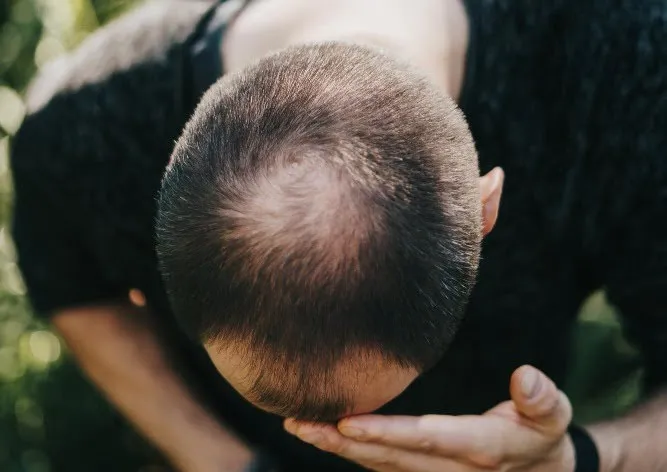
Crown thinning refers to a gradual reduction in hair density at the vertex, which is the highest point of the scalp. Unlike a receding hairline that moves backward from the forehead, crown thinning typically begins as a small area of reduced density that may expand outward over time if left untreated.

Hair thinning at the crown Seattle affects both men and women, though the patterns often differ. Men experiencing vertex hair loss frequently see a circular or oval pattern of thinning that can eventually form a crown bald spot. Women more commonly experience diffuse thinning across the crown that makes the scalp visible along the part line and surrounding areas.

The distinction between thinning and complete baldness matters for treatment planning. Hair follicles that are still producing hair, even if that hair has become finer or weaker, may respond to regenerative treatments like PRP. Once follicles have been dormant for extended periods, restoring growth becomes significantly more challenging.

What is Crown Thinning?

What are the Common Signs of the Crown Thinning Treatment?

Recognizing crown thinning early creates the best opportunity for effective treatment. Because this area sits at the top of the head, regular self-monitoring helps catch changes before they become pronounced.

A visible scalp through the hair at the top of the head often signals the beginning of crown thinning. Hair that appears thinner or finer than the surrounding areas, a small bald spot or area of reduced density at the vertex, and photographs showing more scalp visibility from above all indicate potential crown thinning. 

Some people also notice that the area feels different when touched, with less hair to feel beneath the fingers, or that hair styling becomes more difficult because the crown lacks volume.

These changes may develop over months or years. The gradual nature of crown thinning means that waiting for obvious signs often delays treatment past the optimal window.

Why Early Crown Thinning Treatment Seattle Matters?

Why Early Crown Thinning Treatment Seattle  Matters?

Follicles that are weakening but still active have far greater potential for recovery than follicles that have fully miniaturized or stopped producing hair altogether. Early crown thinning treatment Seattle gives patients the best chance to maintain existing density and potentially improve thickness before the condition progresses.

Research published in the Journal of Cutaneous and Aesthetic Surgery suggests that PRP treatment may be most effective when initiated during the early to moderate stages of hair loss, before significant follicle miniaturization has occurred.

How PRP Works for Crown Thinning Treatment Seattle?

PRP stands for Platelet-Rich Plasma. This treatment involves concentrating platelets from a patient’s own blood and injecting that concentrated solution into areas of thinning. Platelets contain growth factors that may help stimulate follicle activity, improve blood flow to the scalp, and support the growth of thicker, healthier hair.

For patients seeking PRP for crown thinning Seattle, the treatment offers a way to address vertex hair loss without surgery, medications with systemic effects, or significant downtime. Because PRP uses biological material from the patient’s own body, the risk of allergic reaction is extremely low.

The crown area often responds favorably to PRP treatment because follicles in this region may still be active even when visible thinning has begun. Growth factors delivered directly to the scalp can signal weakening follicles to shift from a resting state back into active growth phase.

The PRP Treatment Process for Crown Thinning Seattle

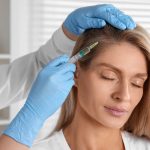
Treatment begins with a standard blood draw from the arm, similar to what occurs during routine lab work. The collected blood is then placed in a centrifuge, which spins at high speed to separate the different blood components. This process isolates the platelets and plasma from red blood cells.

The resulting PRP contains a concentration of platelets significantly higher than normal blood, rich in growth factors including platelet-derived growth factor and vascular endothelial growth factor. This concentrated solution is then injected at strategic points across the crown area and any other regions showing thinning.

The injection process typically takes 30 to 45 minutes. Most patients experience mild discomfort during the procedure, though topical numbing agents can be applied to improve comfort. Because PRP uses the patient’s own blood, there is no risk of allergic reaction to the treatment itself.

Who is a Good Candidate for Crown Thinning Treatment Seattle?

PRP for crown thinning Seattle works best for patients whose follicles are still producing hair, even if that hair has become finer or less dense. A thorough consultation and scalp evaluation helps determine whether PRP represents an appropriate treatment approach.

Patients who tend to respond well to crown thinning treatment include men experiencing early to moderate vertex hair loss with visible thinning but not complete baldness, women noticing increased scalp visibility at the crown or along the part line, individuals who prefer non-surgical treatment options and want to avoid medications with potential side effects, patients whose crown thinning is in an early to moderate stage with follicles that remain viable, and those looking for crown hair regrowth support before considering surgical options.

Patients with significant scarring at the crown, advanced follicle miniaturization where follicles have stopped producing any hair, or certain underlying medical conditions may require a different approach. A consultation allows providers to assess scalp health and recommend the most appropriate path forward.

What Causes Crown Thinning?

Understanding why crown thinning develops helps set realistic expectations for treatment and guides decisions about the best approach.

Genetics play the largest role in crown thinning for most people. Androgenetic alopecia, commonly called pattern hair loss, causes follicles to gradually miniaturize in response to dihydrotestosterone, a hormone derived from testosterone. The crown area tends to be particularly sensitive to DHT in many individuals, which explains why thinning often begins or concentrates in this region.

Aging naturally affects hair growth cycles. As people get older, the time hair spends in the active growth phase tends to shorten, and individual strands may become finer. These changes can make crown thinning more noticeable even in the absence of genetic pattern loss.

Hormonal changes can trigger or accelerate crown thinning. Fluctuations in thyroid hormones, changes during menopause or andropause, and other endocrine shifts may all contribute to increased scalp visibility at the crown.

Nutritional deficiencies in iron, vitamin D, biotin, or protein can impair hair growth and may contribute to thinning throughout the scalp, including the crown. Stress, both physical and emotional, can push large numbers of follicles into the resting phase simultaneously, leading to noticeable shedding that may be most apparent at the crown.

Key Benefits of PRP for Crown Thinning Seattle

Crown bald spot treatment Seattle through PRP offers several advantages for patients seeking a conservative approach to vertex hair loss.

The treatment is non-surgical, requiring no incisions, sutures, or general anesthesia. Most patients return to regular activities the same day or the following day. Because PRP is derived from the patient’s own blood, the risk of adverse reactions remains very low.

PRP supports natural hair growth by working with the body’s own regenerative processes rather than introducing synthetic chemicals. The treatment may improve hair thickness in the crown area, with concentrated growth factors supporting thicker, stronger individual strands over time.

Many patients also report reduced shedding following PRP treatment. While results vary between individuals and no treatment can guarantee complete reversal of crown thinning, patients who begin treatment during the early stages tend to see more favorable outcomes.

The Timeline for Crown Thinning Treatment Seattle

Understanding what to expect helps patients track progress and maintain realistic expectations throughout the treatment process.

First Month: The scalp adjusts to the initial treatment. Some patients experience a temporary increase in shedding during this phase, which represents a normal part of the follicle cycle shift as dormant follicles begin transitioning back to active growth.

Months 2 to 3: Early signs of reduced shedding may become noticeable. Hair at the crown may begin to feel stronger, and some patients observe early regrowth of finer hairs.

Months 4 to 6: Improvement in hair density and thickness at the crown typically becomes more apparent. This is when patients most often report visible changes in scalp coverage and hair quality.

Month 6 to 12: Periodic maintenance sessions help sustain results. Most patients benefit from ongoing treatment, depending on individual response and the degree of initial thinning.

Individual timelines vary based on the extent of crown thinning, underlying causes, and how each patient’s follicles respond to treatment.

PRP vs Other Crown Thinning Treatments Seattle

Treatment Approach Invasiveness Best for
PRP for Crown Thinning Platelet-rich plasma scalp injections Minimally invasive Early to moderate vertex thinning
Low-Dose Minoxidil Topical or oral medication Non-invasive Mild to moderate crown loss
Hair Transplant Surgical follicle relocation Surgical Advanced crown baldness
PRF Hair Restoration Platelet-rich fibrin injections Minimally invasive Similar to PRP candidates
Exosome Hair Restoration Growth factor application Minimally invasive Advanced biological support

PRP is often recommended as a first-line non-surgical option for crown thinning because it requires no downtime and produces gradual, natural-looking results. Patients seeking more comprehensive approaches may benefit from combining PRP with other treatments such as low-dose minoxidil or PRF.

Why Patients Choose PRP for Crown Thinning Seattle?

For many patients in Seattle, PRP appeals because it addresses crown thinning without requiring surgery or long-term medication use. The procedure leaves no visible scars, requires no prolonged recovery, and does not interfere with work or social activities.

The crown area responds particularly well to early intervention because follicles often remain viable even when visible thinning has developed. Rather than waiting until a full bald spot forms and transplant surgery becomes the primary option, patients who begin treatment during the thinning phase work to preserve and strengthen the hair they still have.

This proactive approach tends to produce better long-term outcomes than waiting for more advanced loss to develop.

Why Choose PRP in Seattle for Crown Hair Regrowth?

PRP in Seattle is a dedicated hair restoration provider led by board-certified surgeons and skilled licensed aestheticians with extensive experience in regenerative treatments. Patients looking for vertex hair loss treatment Seattle will find a team that evaluates each case individually rather than applying a single protocol to every patient.

At PRP in Seattle, crown thinning treatment Seattle begins with a thorough scalp evaluation to assess follicle health, determine the stage of thinning, and identify any underlying factors that may be contributing to hair loss. Treatment plans are customized based on each patient’s specific situation and goals.

As a provider of non-surgical hair restoration in Seattle, the clinic offers a full range of options including PRP, PRF, exosome therapy, and low-dose minoxidil. This allows providers to recommend the treatment or combination most appropriate for each individual case.

Schedule a Crown Thinning Consultation in Seattle

Noticing early signs of crown thinning is the right moment to seek evaluation. PRP in Seattle provides hair restoration consultations for patients experiencing vertex hair loss who want a non-surgical, medically guided approach to treatment.

During a consultation, our providers evaluate scalp health at the crown, discuss hair loss history and any contributing factors, and determine whether PRP or another regenerative treatment represents the appropriate recommendation.  

Call (206) 279-2112 or complete an online consultation request to schedule an appointment at PRP in Seattle today.


Contact Us

Fill out the form below to schedule your appointment or ask any questions you have.

[contact-form-7 id=”272″]

FAQs 


Can crown thinning be reversed?

Crown thinning may be improved when follicles are still active and producing hair, even if that hair has become finer. PRP treatment can support follicle health and may encourage thicker growth. However, follicles that have been dormant for extended periods may not respond to treatment. 

How many PRP treatments are needed for crown thinning?

Most patients receive an initial series of 3 to 4 treatments spaced 4 to 6 weeks apart. After this initial phase, maintenance treatments every 6 to 12 months help sustain results. The exact number of treatments varies based on the degree of thinning and individual response.

Is PRP for crown thinning painful?

Most patients experience mild discomfort during PRP injections. Topical numbing agents can be applied before treatment to improve comfort. The procedure is generally well-tolerated, and any discomfort typically resolves within a few hours.

How long does it take to see results from crown thinning treatment?

Most patients begin noticing reduced shedding within 2 to 3 months. Visible improvement in hair density and thickness at the crown typically becomes apparent between 4 and 6 months after beginning treatment. Individual timelines vary based on the extent of thinning and follicle health.

Does PRP work for a bald spot at the crown?

PRP works best when some active follicles remain in the treatment area. For small crown bald spots where follicles may still be present but dormant, PRP may help stimulate regrowth. Larger areas of complete baldness where follicles have been inactive for years may require surgical options like hair transplantation.

What causes thinning specifically at the crown?

The crown area tends to have follicles that are particularly sensitive to DHT, a hormone that causes follicle miniaturization in androgenetic alopecia. This sensitivity explains why crown thinning often develops early in pattern hair loss, even when other areas maintain good density.

PRP Hair Restoration Case #2

This is a 36-year-old woman who desired a fuller hair line. I performed Platelet Rich Plasma (PRP) injections throughout the hair line, which has gradually led to more fullness as seen here 3 months later.

PRP Hair Restoration Case #3

This is a 35-year-old male who on examination, he was losing hair in the frontal temporal, and crown. The results above are after 6 PRP with A-Cell treatments.

PRP With ACell Case #3

This woman was interested in treating the areas in which her hair was thinning. We successfully performed 6 hair PRP treatments with A-cell and she’s happy with the results she’s seen!

PRP With ACell Case #4

This is a 28 year old woman who was interested in treating the hair loss she has been experiencing. We successfully performed 6 hair PRP treatments with A-cell and have seen a significant change!

PRP With ACell Case #5

This is a 26-year-old male who had hair thinning in the occipital, crown parietal and temporal regions. The before and after are after 6 sessions of PRP with A-Cell treatment.

PRP With ACell Case #6

This is a 36 year old man who was interested in treating his thinning hair. We successfully performed 6 hair PRP treatments with A-cell and have seen a great change.

PRP With ACell Case #7

This 28-year old woman was interested in having hair PRP treatments to help the hair loss she had experienced. We successfully completed 6 PRP treatments with A-cell.

PRP With ACell Case #8

Patient is a 36-year-old male who came to us with concerns about hair loss. He elected for a series of PRP + ACell treatments over an 8 month period. Results show drastic improvement after 6 treatment sessions.

PRP With ACell Case #9

This patient was experiencing the early signs of female pattern baldness. Since she was young and the hair loss was mild, she started with non-surgical hair restoration. After 6 sessions of PRP with ACell injections the patient could not be happier with her results.