Hair thinning rarely happens overnight. Most people notice a wider part, a shrinking ponytail, or more scalp showing in photos long before they call it “hair loss.” If that sounds familiar, you are not alone and you may not need surgery to do something about it.
PRP hair restoration in Seattle uses your own platelet-rich plasma to support weakening follicles, improve hair density, and slow visible thinning. At PRP in Seattle, patients from Seattle, Bellevue, and Kirkland choose this treatment because it is non-surgical, uses no foreign material, and fits into a normal workday.
The short answer: yes, PRP can help with hair thinning — especially when follicles are still producing hair, even if that hair is finer, shorter, or more sparse than it used to be.
Why Hair Thinning Happens
Hair follicles do not usually disappear at once. In androgenetic alopecia (male and female pattern hair loss), they gradually shrink. Each growth cycle produces a thinner, weaker strand until the follicle becomes too small to make visible hair.
Common drivers include:
- Genetics and family history of pattern baldness
- Hormonal changes, including DHT sensitivity
- Aging and slower follicle repair
- Stress, illness, or certain medications
- Tight styling, damage, or scalp injury
PRP will not reverse every cause of thinning. It works best when the follicle is still alive. Completely bald areas with no remaining follicles usually need a different plan, such as a hair transplant. That is why a medical evaluation matters before you start injections.
How PRP Hair Restoration in Seattle Works
Platelet-rich plasma is a concentrated portion of your own blood. After a simple blood draw, a medical-grade centrifuge separates the plasma that is rich in growth factors, proteins, and healing signals.
When that PRP is injected into thinning areas of the scalp, those growth factors can:
- Strengthen existing follicles
- Support follicles that have started to miniaturize
- Improve the scalp environment that hair needs to grow
- Encourage thicker, more resilient strands over a series of visits
Your body already uses platelets to heal. PRP puts a higher concentration of those same signals where hair is thinning. Because the plasma comes from you, there is no risk of allergic rejection from a foreign filler or implant.
At PRP in Seattle, treatments are performed or supervised by experienced providers, including board-certified surgeons Dr. Craig Jonov and Dr. Javad Sajan, along with trained injectors. The clinic uses advanced centrifuge technology in a medical setting, not a casual spa setup.
Who Is a Good Candidate for PRP Hair Restoration in Bellevue?
PRP hair restoration in Bellevue is often a strong option if you:
- See thinning at the crown, temples, or along the part
- Still have hair in the area, even if it looks finer or patchy
- Want a non-surgical option with no incision and no scar
- Prefer a treatment made from your own blood
- Are looking to support results after a hair transplant
- Want to act early, before thinning becomes complete baldness
PRP is commonly used for androgenetic alopecia, male pattern baldness, age-related thinning, and some cases of thinning after injury. It is less reliable if hair loss is driven by an untreated medical issue (such as thyroid disease) or if follicles are no longer active.
A consultation at PRP in Seattle reviews your medical history, hair pattern, and goals so the plan matches your scalp — not a generic package.
What to Expect During Treatment
A typical visit is straightforward:
- A small blood draw
- Centrifuge processing (about 20 minutes)
- Numbing of the scalp
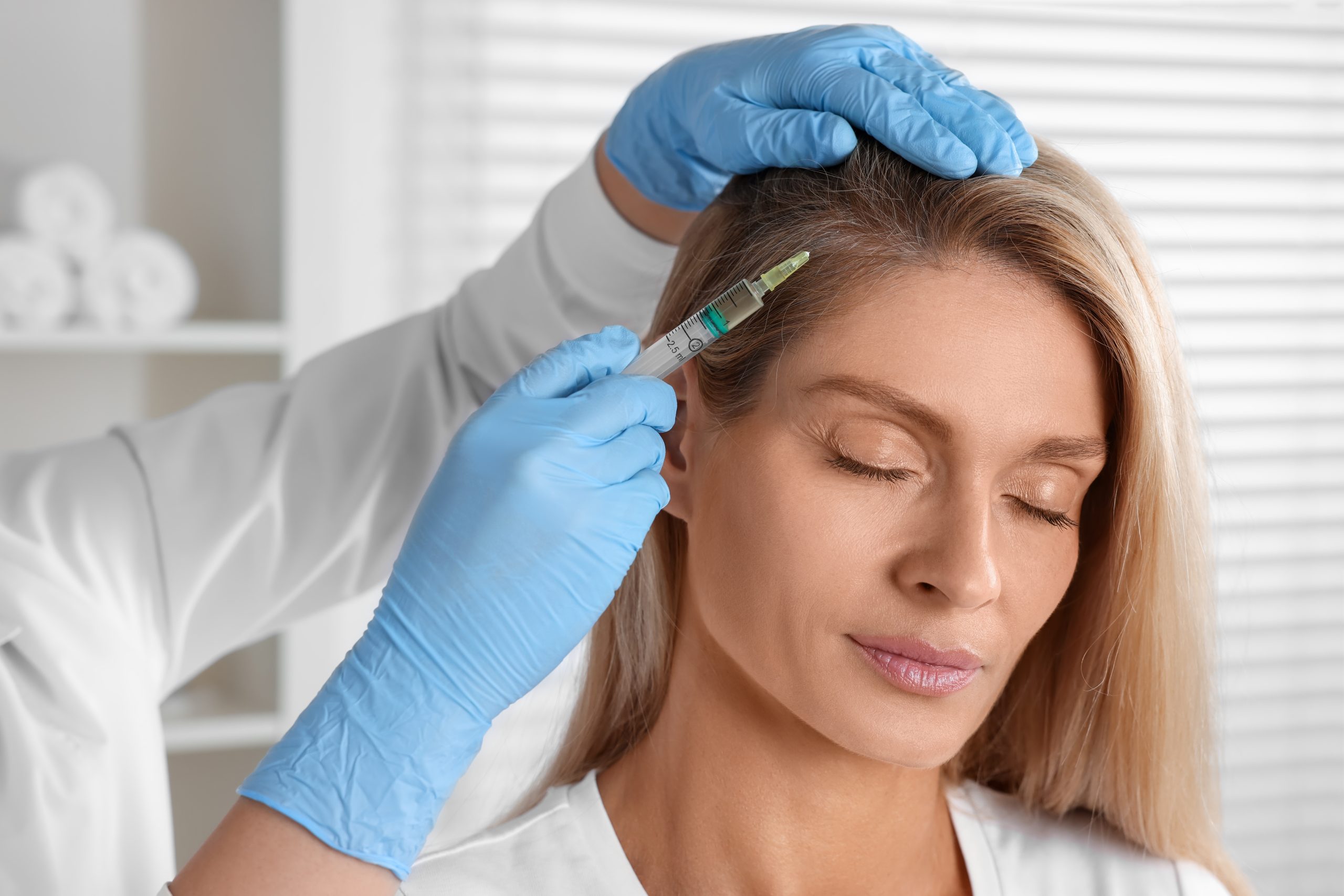
- Precise injections into thinning zones
Most appointments take 30 to 60 minutes. You may feel pressure or a brief pinch. Afterward, the scalp can feel tight or slightly sunburned for a day or two. Most people return to work the same day.
There is no incision, no stitches, and no downtime in the surgical sense. You should still follow aftercare from your provider, including how you wash and style your hair in the first days.
For many patients, providers recommend a series of treatments over several months. On the Seattle service page, a common protocol is six sessions over six months, with yearly maintenance to keep follicles stimulated. Your exact schedule depends on how your hair responds and what you want to achieve.
You can often choose a cosmetic surgeon or a certified injector. Injectors typically have more open availability and a lower fee; surgeons may be preferred if you want a doctor-led visit or are combining PRP with other procedures.
When Results Show Up
Hair grows on a cycle. PRP does not create a full, new head of hair in one visit.
During a multi-month series, many patients first notice baby hairs, less shedding, or a slightly fuller look in thinning spots. A clearer change often appears one to two months after the last session in the initial series, with continued improvement as the scalp keeps responding.
Results are not permanent in the way a transplant can be. PRP does not stop aging or rewrite genetics. A healthy lifestyle, stress management, and periodic maintenance visits help results last longer. If thinning is tied to a medical or behavioral condition, treating that cause still matters.
Why Patients Choose PRP Hair Restoration in Kirkland
PRP hair restoration in Kirkland is convenient for Eastside patients who want medical-grade regenerative care without traveling far. PRP in Seattle serves Kirkland from the Carillon Point location, with additional offices in Seattle (Broadway, across from Swedish) and Lynnwood.
Patients often choose this clinic because:
- Care is customized after a real medical review
- PRP can be combined with other options, including newer PRF hair restoration or, when needed, hair transplant
- The procedure is less invasive than surgery and leaves no scar
- Treatment time is short and recovery is minimal
- Pricing for a surgeon-led series of six treatments starts at $3,500, with the full visit (facility, materials, and anesthetic) included in quoted pricing
Kirkland, Bellevue, and Seattle patients are looking for the same outcome: thicker-looking hair that still looks like their own. PRP is one of the few options that tries to improve the follicle itself instead of only covering the scalp.
Is PRP the Right Next Step for Thinning Hair?
PRP is a strong fit if your goal is thicker, healthier hair from follicles you still have. It is not a miracle, and it is not the right tool for every type of baldness. The best way to know is a consultation: your provider can confirm whether follicles are still viable, whether PRP, PRF, or another approach is more appropriate, and how many sessions you are likely to need.
If you are noticing a wider part, a thinner ponytail, or more scalp in the mirror, earlier treatment usually gives PRP more to work with.
Ready to see if PRP can help your hair thinning?
Schedule a consultation at PRP in Seattle. Call (206) 279-2112 or book online. The team serves Seattle, Bellevue, Kirkland, and nearby communities, and typically responds within 24 hours.