Hair thinning rarely shows up all at once. A little more hair in the shower drain, a widening part, a style that does not quite feel as full as it used to. At first, it is easy to ignore,but over time, it becomes harder to avoid. This starts affecting many, often reducing confidence in ways they did not expect.
The frustrating part is not just the hair loss itself but the uncertainty around what actually works. PRP and exosome therapy are often discussed as advanced non-surgical hair loss treatments in Seattle, but it is not always clear how they differ or which is right for your stage of thinning.
That is where understanding the comparison matters. Choosing the right approach is not about chasing the newest treatment; it is about finding what your scalp actually needs to respond and recover.
At PRP In Seattle, licensed aestheticians under the guidance of board-certified providers offer one of the best hair restoration treatments in Seattle, working with each patient to determine which approach makes the most clinical sense for their stage of hair loss.
What Is PRP Hair Restoration?
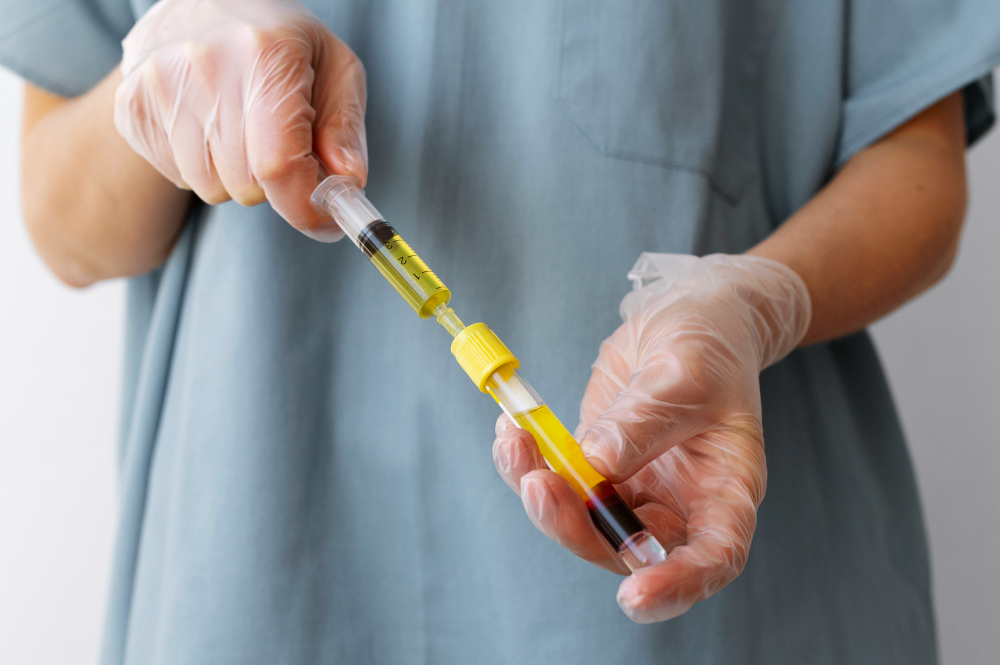
PRP stands for platelet-rich plasma. It is derived from a small draw of the patient’s own blood. That blood is placed in a centrifuge, which separates the plasma from red blood cells and other components. The result is a concentrated solution rich in growth factors, proteins, and natural healing agents.
During a PRP hair restoration session, the provider injects this concentrated plasma directly into thinning areas of the scalp. The growth factors in PRP signal dormant hair follicles to re-enter the active growth phase. Because PRP uses the patient’s own biological material, there is no risk of allergic reaction and no synthetic additives.
PRP is most effective when started in the earlier stages of hair thinning. It works best for both male and female pattern hair loss and for patients who want a fully natural, autologous treatment approach.
What Is Exosome Hair Restoration?
Exosomes are microscopic vesicles produced by cells throughout the body. Their primary role is cellular communication. They carry growth factors, signaling proteins, and genetic instructions between cells, directing processes like tissue repair and regeneration.
The exosomes used at PRP In Seattle are derived from donated mesenchymal stem cells through an inspected process. They are lab-produced, purified, and concentrated to deliver a high volume of regenerative signaling molecules directly to the scalp.
When injected into the scalp, exosomes support follicle repair, reduce inflammation around follicles, and improve the overall scalp environment for hair growth. Unlike PRP, exosomes are not drawn from the patient’s own blood. They are a standardized, lab-prepared product that delivers a consistent concentration of growth factors regardless of the individual patient’s biology.
Exosomes are frequently combined with PRP or PRF (platelet-rich fibrin) to create a more comprehensive regenerative treatment. The combination allows PRP’s autologous growth factors to work alongside exosomes’ advanced cellular signaling.
What is the Difference Between Exosomes & PRP
The table below summarizes the main differences between PRP and exosome hair restoration to help patients understand what each treatment offers.
| Feature | PRP | Exosomes |
| Source | Patient’s own blood | Lab-produced regenerative exosomes |
| Growth Factors | High concentration | Very high concentration |
| Natural / Autologous | Yes | No (lab-derived) |
| Treatment Goal | Stimulate dormant follicles | Enhance follicle repair and cellular signaling |
| Downtime | Minimal | Minimal |
| Best For | Early-stage thinning | Early-to-moderate thinning |
| Can Be Combined | Yes | Yes |
Which Treatment Works Better for Hair Loss?
There is no universal answer to this question. The right treatment depends on the patient’s age, degree of hair thinning, genetics, scalp health, and treatment goals.
PRP is often the preferred starting point for patients who want a fully natural treatment that relies entirely on their own biology. It has a well-established track record for early-stage androgenic hair loss in both men and women.
Exosome therapy is often recommended for patients who want a higher concentration of growth factors than PRP alone can deliver, or for those whose PRP results have plateaued. Because exosomes are lab-produced with a consistent formulation, they can provide a more potent regenerative signal.
For many patients, the most effective approach is a combination of both. PRP or PRF provides the autologous growth factors from the patient’s own blood, while exosomes add advanced cellular communication molecules that support deeper follicle repair. PRP In Seattle providers assess each patient individually and build a treatment plan based on clinical findings, not a one-size approach.
Who Is a Good Candidate for PRP Hair Restoration?
PRP is appropriate for a wide range of patients experiencing hair thinning. Candidates who tend to respond well include:
- Patients with early-stage hair thinning
- Men experiencing male pattern hair loss (androgenic alopecia)
- Women with female pattern hair loss or diffuse thinning
- Patients who prefer a fully natural treatment using their own blood
- Those who are not yet candidates for hair transplant surgery
- Patients who want to slow the progression of hair loss before it advances
PRP is most effective when started before hair loss reaches an advanced stage. Once follicles become permanently dormant or scarred, non-surgical treatments have limited ability to reverse the loss. Early intervention typically produces the strongest results.
Who Is a Good Candidate for Exosome Hair Restoration?
Exosome hair restoration is appropriate for patients who are seeking a more advanced regenerative approach, particularly those who want to enhance the effects of PRP or who are looking for a higher concentration of growth factors. Good candidates generally include:
- Patients seeking advanced regenerative therapy beyond standard PRP
- Those who want to combine exosomes with PRP or PRF for a multimodal approach
- Younger patients with active thinning patterns who want to address follicle health proactively
- Patients who want to improve the overall scalp environment alongside follicle stimulation
- Individuals in the early to moderate stages of hair loss
Advanced hair loss that has already reached significant stages may not respond adequately to non-surgical treatments. In those cases, a hair transplant consultation may be more appropriate. Providers at PRP In Seattle evaluate each patient’s hair loss pattern and health history before recommending any treatment plan.
Can Exosomes and PRP Be Combined?
Combining PRP and exosome therapy is a common and clinically supported protocol at PRP In Seattle. The two treatments work through different but complementary mechanisms, which is why combining them often produces stronger results than either treatment alone.
PRP delivers concentrated growth factors drawn from the patient’s own blood, which activates dormant follicles and promotes localized tissue repair. Exosomes add a layer of cellular communication that supports deeper follicle regeneration, reduces inflammation, and signals surrounding cells to participate in the repair process.
PRF (platelet-rich fibrin), a second-generation form of PRP with a slower growth factor release, can also be incorporated into combination protocols. PRF contains natural stem cells from the patient’s own blood, which can further boost the regenerative effects of exosomes.
A multimodal hair restoration approach is often recommended for patients with more active thinning or those who want to address both follicle stimulation and scalp health simultaneously.
What Results Can Patients Expect?
Hair growth following PRP or exosome treatments is gradual. Results do not appear overnight, and most patients require multiple sessions before significant changes become visible. Typical improvements patients report include:
- Reduced shedding and hair fall
- Increased hair density in treated areas
- Thicker, stronger individual hair strands
- Improved scalp health and follicle environment
- Slower overall progression of hair loss
Most patients begin to see early changes within a few weeks after their second or third session. Noticeable density improvements are typically visible within three to six months of beginning treatment. Individual results vary based on age, cause of hair loss, degree of thinning, and the patient’s overall health.
Results cannot be guaranteed. Hair restoration outcomes depend on factors specific to each patient, including genetics, hormonal influences, and how the body responds to treatment. PRP In Seattle providers set realistic expectations during the initial consultation and adjust treatment plans based on how each patient responds over time.
Why Seattle Patients Choose PRP In Seattle?
PRP In Seattle specializes in regenerative non-surgical treatments. Hair restoration is a core focus of the practice, with licensed aestheticians under the guidance of board certified surgeons offering PRP, PRF, and exosome-enhanced hair restoration to patients throughout Seattle.
Every treatment plan at PRP In Seattle is customized. Providers evaluate medical history, degree of hair loss, scalp condition, and patient goals before recommending a treatment path making it one of the Best hair restoration treatments in Seattle. Patients have access to standalone PRP, PRF, exosome therapy, and combination protocols depending on what their hair loss presentation calls for.
The clinic uses advanced centrifuge technology to process PRP at the highest possible concentration, and the exosome products used are derived through an FDA-inspected process to ensure quality and consistency.
Schedule a Hair Restoration Consultation in Seattle
Patients living in Seattle and nearby areas who are researching non-surgical Hair thinning treatment Seattle can schedule a consultation with the team at PRP In Seattle. Providers will evaluate hair loss progression, discuss treatment options including PRP, PRF, exosome therapy, and combination protocols, and build a customized plan.
Call PRP In Seattle at (206) 279-2112 or book online to schedule a consultation at one of three convenient locations across the greater Seattle area.