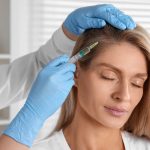

Hair thinning often develops slowly rather than overnight. A wider part, extra strands after brushing, less volume at the roots, and a scalp that shows through more in bright light are usually the first signs, and many people put off looking into the cause for months.
Identifying the cause matters before choosing a treatment, since genetics, hormones, stress, nutrition, and age each affect the hair growth cycle differently. For people with early to moderate thinning, non-surgical treatments such as PRP for thinning hair may be an option to consider.
This blog explains the common causes of hair thinning, the early signs to watch for, and when it may be time to seek treatment. Moreover this blog also covers how prp hair loss treatment helps to reduce hair thinning.
What Is Hair Thinning?
Losing some hair every day is normal. Most people shed around 50 to 100 strands daily as part of the natural hair growth cycle. Hair thinning is different because the overall amount of hair on the scalp gradually decreases.
As more hairs are shed than replaced, the hair may begin to look less full. The part can become wider, the scalp may be easier to see, and individual strands may feel finer than they used to.
These changes can happen slowly, which makes them easy to overlook. Noticing them early can help identify the cause and determine which hair restoration options may be appropriate.
What Causes Hair Thinning?
There are multiple factors that affect the hair causing thinning. Some of them are:
-
Genetics and Hereditary Hair Loss
Genetics is the most common cause of hair thinning. Male pattern hair loss shows up as a receding hairline and crown thinning, while female pattern hair loss usually presents as diffuse thinning across the top of the scalp. The American Academy of Dermatology notes that hereditary hair loss develops as follicles shrink through miniaturization, producing thinner strands until some stop growing visible hair.
-
Hormonal Changes
Hormone shifts can disrupt the hair growth cycle at several points in life, including postpartum, when shedding is common a few months after childbirth, and during perimenopause or menopause, when thinning tends to spread gradually across the scalp.
-
Stress and Lifestyle Factors
Prolonged stress can push a larger number of follicles into a resting phase, leading to noticeable shedding weeks or months later. Poor sleep and major weight changes place similar strain on the hair growth cycle.
-
Nutritional Factors
Iron deficiency and other nutrient gaps are frequently linked to hair thinning, since follicles rely on a steady nutrient supply. Bloodwork remains the most reliable way to identify a nutritional cause.
-
Aging
The hair growth cycle naturally slows with age as growth phases shorten and resting phases lengthen, gradually reducing density. This affects nearly everyone eventually, though the rate and pattern vary from person to person.
Hair thinning linked to hormones or aging is a pattern that PRP hair restoration for women is specifically designed to address, targeting follicles across a broad area rather than one zone.
What Are the Early Signs of Hair Thinning?
Recognizing early signs makes it easier to address hair thinning before it becomes more advanced. Some common indicators include:
- A part that looks wider than before
- A ponytail that feels noticeably thinner
- A hairline that has started to recede
- More scalp visible under bright light
- Increased shedding during washing or brushing
- Individual strands that feel finer than before
- An overall reduction in hair volume
Noticing even one or two of these changes is often reason enough to look into the cause before thinning progresses further.
When Should You Consider Treatment for Hair Thinning?
Professional evaluation becomes worthwhile once thinning continues over several months rather than resolving on its own. Signs worth acting on include a hairline or part that keeps changing, density that keeps decreasing, shedding that stays elevated, and strands that feel progressively finer, especially once home products stop making a difference.
What Treatments Are Available for Thinning Hair?
Options range from topical treatments and, when appropriate, medications, to regenerative approaches like PRP, PRF, and exosome therapy. As a prp hair loss treatment, PRP appeals to people who want a non-surgical option, while hair transplantation remains available for appropriate candidates with more advanced loss. This PRP vs. traditional hair loss treatments comparison looks at how PRP differs from more conventional approaches.
| Treatment | Approach | Best For |
| Topical treatments | Minoxidil and similar products | Mild to moderate thinning |
| Oral medications | Prescribed when medically appropriate | Pattern hair loss |
| PRP | Growth factors from your own blood | Early to moderate thinning |
| PRF | Platelet-rich fibrin, slower growth factor release | Similar candidates to PRP |
| Exosome therapy | Regenerative signaling compounds | Broader biological support |
| Hair transplantation | Surgical follicle relocation | Advanced, stable hair loss |
Can PRP Help With Thinning Hair?
Platelet-rich plasma, or PRP, is prepared from a small sample of a patient’s own blood, spun in a centrifuge to concentrate the platelets. These platelets carry growth factors known to support tissue repair and cellular activity. When applied to the scalp, prp treatment for thinning hair works by delivering those growth factors to areas where follicles show reduced activity, encouraging a more active growth phase.
PRP tends to be considered for early to moderate thinning tied to genetics, hormones, or aging, where follicles remain present but underactive. Advanced cases with significant follicle loss may see more limited benefit. Patients interested in PRP for Thinning Hair Seattle can review how the treatment is approached for early to moderate hair loss.
How Does PRP Treatment for Thinning Hair Work?
-
Blood Collection
The process begins with a small blood draw, similar to a standard blood test, taking only a few minutes.
-
PRP Preparation
The sample is placed in a centrifuge, which spins it at a controlled speed to separate the platelet-rich plasma used in treatment.
-
Scalp Treatment
The prepared PRP is applied to targeted areas of the scalp where thinning is most noticeable, in a short in-office appointment.
-
Hair-Growth Cycle
Because hair grows in cycles rather than continuously, visible improvement takes time to appear, as follicles move through resting and growth phases. Details on how many PRP treatments are needed for hair thinning are covered in a separate article on typical timelines and session counts.
Is PRP Suitable for Everyone With Thinning Hair?
PRP is not automatically the right fit for every case. Candidacy depends on the underlying cause, the stage of thinning, how active existing follicles are, scalp health, and individual goals. Those exploring prp for thin hair often want confirmation that their pattern is a good match, and a professional assessment remains the most reliable way to determine that.
What Should You Expect After PRP Treatment?
Results develop gradually rather than immediately, since new growth follows the natural hair cycle, and multiple sessions are often recommended to build and maintain results. People who search for prp treatment for hair fall often want reassurance that shedding will slow gradually rather than stop overnight. A detailed breakdown of what to expect during and after PRP hair restoration covers the process from start to finish.
PRP vs. Exosome Therapy for Thinning Hair
PRP vs exosome hair restoration are both non-surgical approaches to hair thinning, but they use different methods. The right option depends on factors such as the cause and pattern of hair loss, the condition of the follicles, and individual treatment goals.
| Factor | PRP | Exosome Therapy |
| Source | Uses platelets and growth factors from the patient’s own blood | Uses exosomes and other cellular signaling components |
| How it works | Delivers concentrated growth factors to the scalp to support follicle activity | Uses signaling molecules intended to influence cellular activity around hair follicles |
| Blood draw | Yes | Generally no blood draw is required |
| Treatment approach | PRP is prepared from a patient’s blood and applied to areas of thinning | Exosome-based products are applied to targeted areas of the scalp |
| Best suited for | Often considered for early to moderate thinning when follicles are still active | May be considered as another regenerative approach for certain types of thinning |
| Treatment choice | Depends on the cause and stage of hair loss, along with individual goals | Depends on the cause and stage of hair loss, along with individual goals |
Ready to Take the Next Step for Thinning Hair?
Early treatment can make sense when hair thinning is becoming noticeable or continues to progress. At PRP in Seattle, master aestheticians provide PRP hair restoration treatments under the guidance of highly experienced, board-certified plastic surgeons. This approach combines hands-on treatment with physician oversight to help patients understand whether PRP is appropriate for their pattern of hair loss.
Schedule a consultation with PRP in Seattle to discuss thinning hair and explore whether PRP may be a suitable treatment option.
Frequently Asked Questions About Hair Thinning
What are the first signs of hair thinning?
A widening part, increased shedding, finer strands, and more visible scalp under bright light.
Can PRP help with thinning hair?
PRP can support density in early to moderate thinning by delivering growth factors that encourage follicle activity, though results depend on the underlying cause and stage of hair loss.
How many PRP treatments are needed for thinning hair?
The number of sessions varies by individual, as outlined in this guide on how many PRP treatments are needed for hair and typical protocols.
How long does it take to see results from PRP?
Because hair growth follows a cycle, visible results typically take several months, with continued improvement over subsequent cycles. This PRP hair restoration results and timelines overview covers what that progression usually looks like.
Can PRP be used for both men and women?
Yes. PRP is used for both male and female pattern hair loss, as well as other causes of diffuse thinning.
Is PRP better for early or advanced hair loss?
PRP tends to work best for early to moderate thinning where follicles remain active, while advanced hair loss with significant follicle loss may call for different approaches.